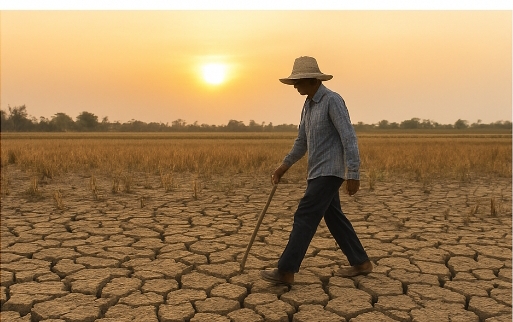
One of the major consequences of climate change is the decline in crop yields. Many farmlands are experiencing long periods of drought, making the soil dry and less fertile. In other regions, heavy rains and floods wash away crops before they mature. These unexpected changes make it difficult for farmers to plan their planting and harvesting seasons, which leads to lower food production.
As food production decreases, the demand for food continues to rise due to population growth. This imbalance puts pressure on global food supplies and causes an increase in food prices. Poorer communities suffer the most, as they struggle to afford basic meals.
Furthermore, climate change also affects livestock. Extreme heat can harm animals, reduce milk production, and increase the spread of diseases. Fish populations in oceans and rivers are also affected by rising temperatures and water pollution.
To solve this growing crisis, countries must work together. Governments, scientists, and farmers need to adopt sustainable farming methods such as irrigation systems, drought-resistant crops, and modern technology that helps manage soil and water. Reducing pollution and planting more trees can also help slow down global warming.
In conclusion, climate change is a threat to global food security, but with collective action and proper planning, the world can protect its food systems and ensure a safer future for everyone