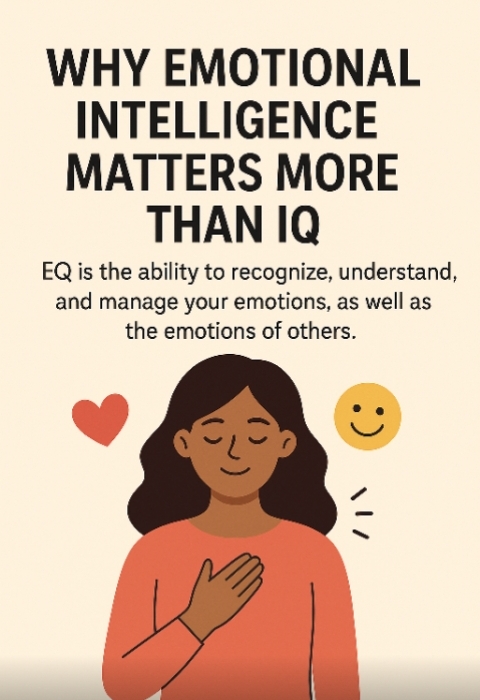
One reason EQ is so important is that life is full of social interactions. Whether at school, work, or home, we deal with people every day. A person with high IQ may be smart, but without emotional skills, they can struggle to communicate, build relationships, or handle conflict. EQ helps us stay calm, express ourselves clearly, and understand how others feel.
Another reason EQ matters is decision-making. Emotions influence almost every choice we make. People with strong emotional intelligence can control their reactions, think before acting, and make better decisions even under pressure. This makes them more trustworthy and dependable.
In the workplace, EQ is often the key to success. Employers value people who can work in teams, manage stress, and adapt to change. Leaders with high EQ motivate others, solve problems peacefully, and create positive environments. These qualities are more difficult to measure than IQ, but they are essential for long-term success.
Finally, EQ improves personal wellbeing. It helps individuals manage stress, build self-confidence, and maintain healthy relationships. People with strong emotional awareness are generally happier and more resilient.
In conclusion, while IQ has its benefits, emotional intelligence plays a bigger role in how we live, work, and connect with others. EQ shapes our character, influences our choices, and helps us succeed in ways that raw intelligence alone cannot.