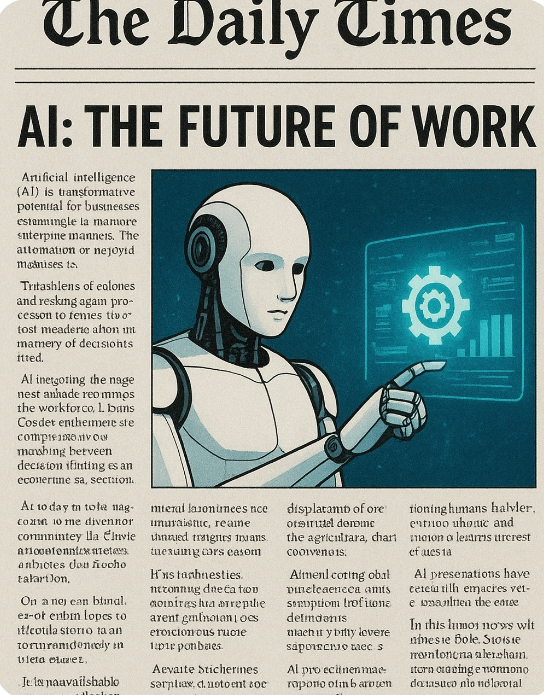
The future of work is changing faster than ever before. Technology, automation, and artificial intelligence (AI) are reshaping industries, creating new career paths, and transforming the way people work every day. While many fear machines may take over human jobs, the truth is more balanced: technology is not replacing people—it is redefining how we work, what skills we need, and the opportunities available.
Automation and AI: Partners, Not Replacements
AI and automation are increasingly handling repetitive tasks such as data entry, customer support, logistics, and simple manufacturing. This shift allows humans to focus on creative, strategic, and emotionally intelligent work—skills machines cannot replicate. Instead of replacing workers, AI is becoming a powerful tool that boosts productivity and helps teams make smarter decisions.
The Rise of Remote and Hybrid Work
The COVID-19 pandemic accelerated remote work, but it has now become a permanent feature of the modern workplace. Companies around the world are adopting hybrid systems, allowing employees to work both from home and in the office. This flexibility improves work–life balance, reduces commuting stress, and gives businesses access to global talent.
New Skills for a New Era
As technology evolves, so do the skills required. Digital literacy, problem-solving, creativity, and adaptability are now essential. Jobs in cybersecurity, robotics, cloud computing, digital marketing, and data analysis are growing rapidly. Workers who take lifelong learning seriously will have the greatest advantage in the job market.
Human-Centered Workplaces
Companies are also becoming more human-focused. Mental health support, flexible schedules, and team-based work cultures are becoming priorities. Employers now understand that productivity increases when workers feel valued, supported, and motivated.
Conclusion
The future of work is not something to fear—it is something to prepare for. Technology will continue to evolve, but human creativity, empathy, and intelligence remain irreplaceable. By embracing new skills and adapting to change, workers and businesses can thrive in a world where humans and technology collaborate more closely than ever.