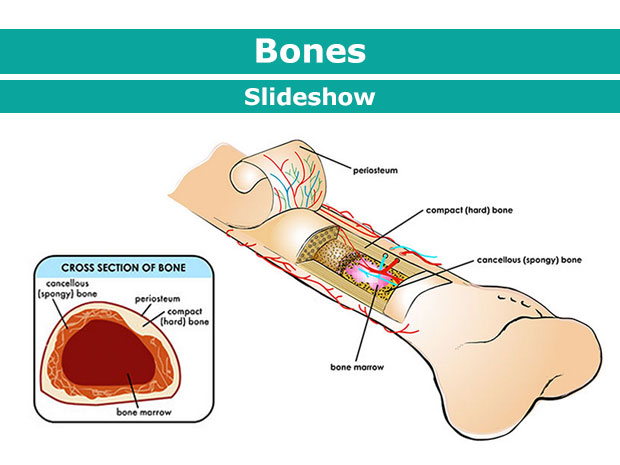
What Are Bones Made Of?
Bones are made up of:
Calcium and phosphorus: Minerals that make bones hard and strong.
Collagen: A flexible protein that gives bones their structure and some elasticity.
Bone marrow: The soft tissue inside bones that produces blood cells.
Types of Bones in the Body
The human skeleton contains 206 bones, grouped into different types based on their shape and function:
1. Long bones – found in arms and legs, help with movement.
2. Short bones – found in wrists and ankles, help with stability.
3. Flat bones – such as the skull and ribs, protect internal organs.
4. Irregular bones – like the spine, with complex shapes.
Functions of Bones
Bones perform several crucial functions, including:
Support: They form the body’s framework.
Protection: Skull protects the brain, ribs protect the heart and lungs.
Movement: Bones work with muscles to enable movement.
Blood cell production: Bone marrow makes red and white blood cells.
Mineral storage: Bones store calcium and release it when the body needs it.
How Bones Grow and Heal
Bones start forming from cartilage while a baby is developing. As a person grows, the bones harden and lengthen. Even in adulthood, bones keep renewing themselves through a process called remodeling.
When a bone breaks, the body immediately begins repairing it. New bone tissue gradually forms, making the healed area sometimes even stronger than before.
Keeping Bones Healthy
To maintain strong, healthy bones:
Eat foods rich in calcium (milk, fish, vegetables).
Get enough vitamin D, which helps the body absorb calcium.
Exercise regularly—especially weight-bearing activities like walking or running.
Avoid smoking and excessive alcohol