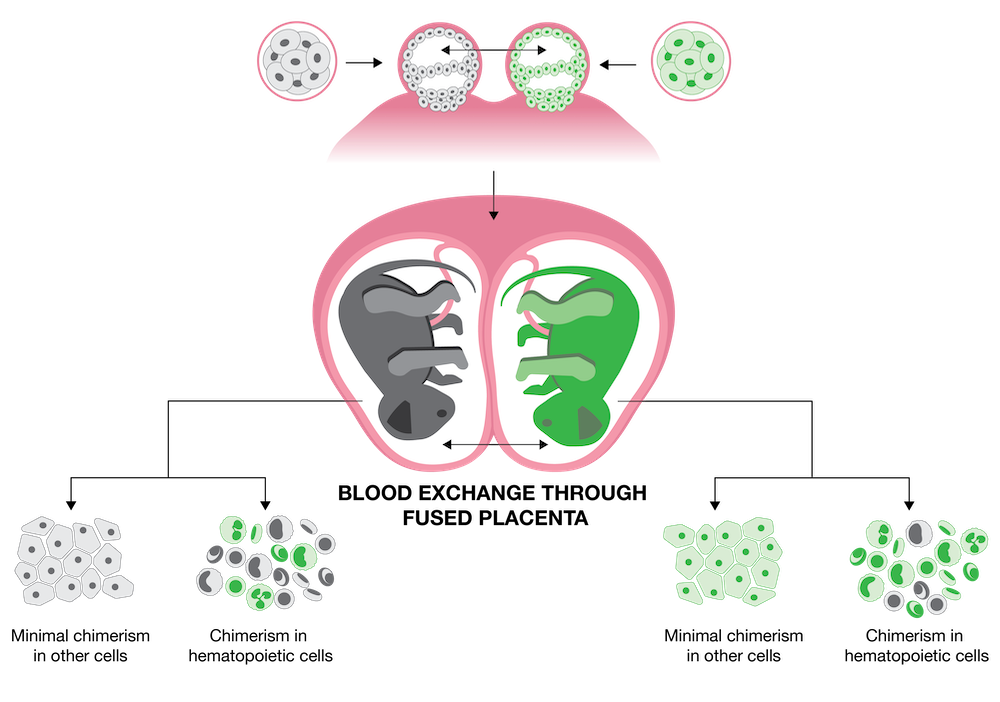
Chimerism is a rare and fascinating biological phenomenon in which a single individual harbors two or more genetically distinct cell populations. The term derives from the mythical Chimera, a creature composed of parts from different animals, reflecting the unusual nature of this condition. While often unnoticed, chimerism can have significant implications for genetics, medicine, and even personal identity.
At its core, chimerism occurs when cells from different zygotes, or fertilized eggs, coexist within one organism. This can happen through several mechanisms. The most common form is twin chimerism, which arises when two embryos merge early in development, resulting in one individual with a mixture of cells from both embryos. Another form, microchimerism, occurs when a small number of cells from one individual are present in another, often as a result of maternal-fetal cell exchange during pregnancy. Less commonly, chimerism can be artificially induced through organ transplantation or stem cell therapy.
Genetically, chimerism can manifest in surprising ways. In some cases, it may be detectable only through specialized genetic testing, revealing that different tissues carry distinct DNA profiles. For instance, a person’s blood may carry a different genetic signature than their skin or organs. This phenomenon has occasionally led to legal and forensic complications, such as disputes in paternity tests, where a chimeric individual’s blood DNA does not match that of their reproductive cells.
Despite its rarity, chimerism can occasionally produce observable traits. Some individuals exhibit mosaic pigmentation, where patches of skin have different coloration due to the presence of different genetic cell lines. In other cases, chimerism may result in more subtle physiological differences, potentially affecting organ function or susceptibility to disease. Interestingly, in the context of organ transplantation, microchimerism has been associated with both tolerance and rejection responses, making it a subject of ongoing medical research.
Chimerism also raises profound questions about identity and biology. Traditionally, each person is assumed to have a single, uniform genome. Chimerism challenges this assumption, revealing that genetic identity can be more fluid and complex than previously thought. This has implications not only for medical diagnostics but also for our understanding of heredity, reproduction, and the boundaries of the self.
Although still relatively rare, advances in genetic testing and prenatal diagnostics are increasing the detection of chimerism. Researchers are particularly interested in understanding the full spectrum of its biological effects, from immune system development to reproductive health. Additionally, studying chimerism offers insights into developmental biology, as it illuminates how cells from different origins can coexist and interact within a single organism.
In conclusion, chimerism is a remarkable example of nature’s complexity, where one individual can carry multiple genetic identities. While it is often invisible and harmless, it has important implications for medicine, genetics, and our broader understanding of human biology. As science continues to uncover the nuances of chimerism, it challenges long-held assumptions about individuality, inheritance, and the very definition of what makes us who we are.